
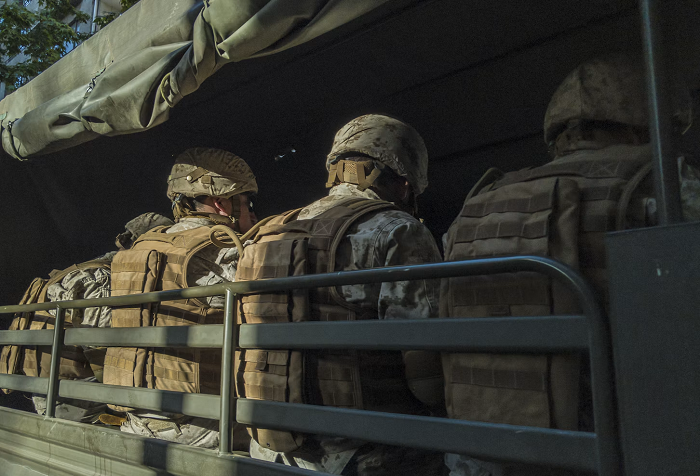
OCTOBER 16, 2026 – In the military, you’ve got to stay sharp because hesitation is often a grave danger. However, once you’re finished with a difficult mission, your body may take a while to unwind. You might find that your heart is pounding, your muscles are tight, and your brain is rehashing the day’s events.
Over time, this difficulty relaxing can develop into a cycle of stress and fatigue. In some cases, the stress and trauma of the work eventually manifests as post-traumatic stress disorder (PTSD).
For many of these anxiety and stress-related symptoms, breathwork can be a surprisingly effective tool. It’s not a miracle cure for everything that ails you, but breathing mindfully can be just what you need to find some peace. Let’s learn more.
How Box Breathing Helps Bring the Stress Response Under Control
Box breathing is a simple method that involves four identical segments of time: breathe in, hold, breathe out, and hold. For example, you could plan to do 4 seconds in each segment, picturing the four sides of a square in your mind’s eye as you breathe through the pattern.
According to breathwork coach Stuart Sandeman, the US Navy SEALs are famously box breathers. He notes that the elite special forces teams use it prior to entering hostile encounters. Likewise, Dr. Helen Gar describes box breathing as one of the most powerful evidence-based hacks for controlling one’s stress response and nervous system.
It’s easy to see why the method might appeal. You can practice it sitting down before a challenging briefing or at a lull in your shift. The deliberate breathing at a slower pace regulates heart rate and alleviates the bodily sensations of stress.
Begin with a few relaxed breaths and don’t worry about holding out too long to start with. No one likes holding their breath while they are already panting. We all have different responses to breath retention; for some, it spikes anxiety levels. So, if you find holding for 4 seconds tough when you’re stressed out, adjust the time accordingly. The point is that it needs to be a very symmetrical breathing pattern.
Why Breathwork Works Best Alongside Exercise and Other Recovery Habits
Simple breathing exercises like box breathing are easy to do on your own, but some people find it easier to have some guidance. Heart Rate Variability Biofeedback (HRVB) uses a device to show you your body’s signals while you’re doing your breathing exercise. You can see how your breathing affects your heart rate and use this information to guide your practice.
A meta-analysis shows how multiple studies report moderate to large reductions in PTSD symptoms via HRVB. This treatment also had far lower attrition rates of 5.8% compared to the 16% to 36% seen in other PTSD treatments.
Likewise, physical activity is also something that can relieve anxiety. As the exercise app Brain-Body Therapy explains, anxiety doesn’t just live in thoughts. It can affect your entire body, which is why a brisk walk often seems to clear your head.
If walking isn’t your thing, not to worry; you can easily find an exercise program for anxiety that suits you. The important part is that it contains the right type of exercises that put you in zone 2 cardio. This is when your heart rate reaches between 40% and 60% of its maximum rate. Regular exercise in this zone releases a range of hormones like endorphins, serotonin, and dopamine.
For military personnel, it can be a change in the way you exercise. Rather than going full-throttle, this type of exercise needs you to pull back a little. After all, the goal isn’t to put on more muscle but to help relax your mind.
Why Addressing Anxiety With Breathwork Early Matters
Your body’s natural response to stress is to gear you up for fight or flight. Your breathing speeds up, your heart rate increases, and you focus narrowly on the threat that may be imminent. Those physiological changes can be beneficial during a stressful event, but not if they continue while you’re trying to rest. The fact is that a significant portion of mental health issues that the military faces relate to stress and anxiety.
A report showed that adjustment, anxiety, and depressive disorders made up 66.5% of over 1 million new mental health diagnoses in active-duty troops from 2021 to 2025. Post-traumatic stress disorder rates remain stable but significant at around 9.7%. This is based on the Medical Surveillance Monthly Report by the Armed Forces Health Surveillance Division.
It’s not just that prolonged anxiety and stress are bad, but that it also tends to affect sleep, which complicates your situation. This is because prolonged stress and anxiety are known to affect sleep and are a factor in insomnia, which then raises the risk of other conditions.
Research has found that insomnia disorder is associated with a 6.5x higher risk of PTSD. It was also linked to a 5.2x higher risk of anxiety and a 4.6x higher risk of depression. These numbers came from a sample size of over 40,978 service members with insomnia and 40,978 without insomnia.
This is why finding a way to relax early on is so important. Breathwork sits at a perfect balance of effectiveness and simplicity. It can prevent you from going down an anxiety spiral that gets harder to exit the longer you stay in it.
Frequently Asked Questions
How long does it take for breathwork to reduce anxiety?
Some people feel calmer within a few minutes of practicing slow, controlled breathing, while others need regular practice before noticing a difference. The response varies depending on the person and situation. If breathwork increases discomfort or dizziness, stop and try gentler breathing without holding your breath.
What are the signs of chronic stress in military personnel?
Chronic stress can show up as irritability, difficulty sleeping, persistent worry, muscle tension, headaches, and trouble concentrating. Military personnel may also become unusually watchful, withdraw from loved ones, or struggle to relax when off duty. If these symptoms persist or interfere with daily life, professional support may help.
What type of exercise is best for reducing anxiety?
Aerobic activities such as brisk walking, cycling, swimming, and jogging can help reduce anxiety symptoms. Strength training may also be beneficial, so the best option is usually something you enjoy and can maintain consistently. Start at a comfortable intensity and build gradually, especially if you are returning after a break.
Key Numbers & Facts at a Glance
| Prevalence of adjustment, anxiety, and depressive disorders in the military | 66.5% of over 1 million new mental health diagnoses |
| PTSD rates among active-duty troops | 9.7% |
| Impact of insomnia | 6.5x higher risk of PTSD, 5.2x higher risk of anxiety, and 4.6x higher risk of depression |
| HRVB attrition rate | 5.8% |
Military personnel face circumstances that can make it difficult to recover from stress. They deal with demanding schedules, disrupted sleep, and repeated exposure to challenging situations. Breathwork offers a simple skill for managing some of the body’s physical responses. Similarly, HRVB can give people a more structured option, and regular zone 2 cardio exercise can support anxiety management.
You might have to try different things before you find something you’re comfortable with that can become part of your routine. A few minutes of self-directed breathing or walking isn’t going to immediately undo every impact of trauma. Yet, if you make it a habit, it can be an effective part of a larger healing strategy.