
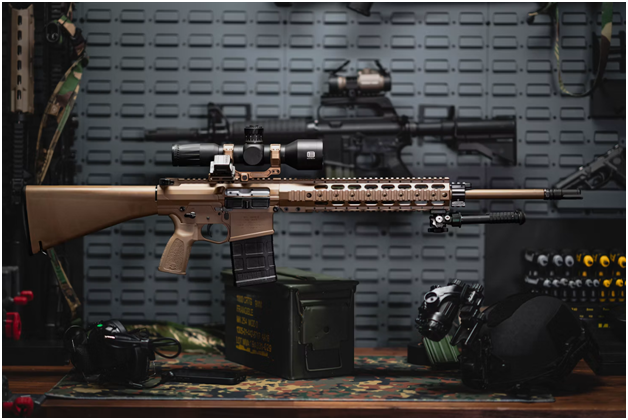
NOVEMBER 4, 2026 – An inherited service rifle can arrive with a family story and surprisingly little paperwork. A relative may remember where it came from, while the documents that explain its ownership sit in another box entirely. Preserving, storing, or transferring a military firearm raises questions that ordinary household belongings don’t.
A war trophy might have a DD Form 603-1 or a theater bring-back certificate; another firearm might have registration records, purchase receipts, or nothing beyond a handwritten note. Those differences deserve attention before cleaning, shipping, or arranging a sale. With an estate being settled or a collection changing hands, the immediate challenge is separating family history from documented provenance, then understanding what those records actually establish.
Start With What the Paperwork Says You Own
Confirm the firearm’s legal status first, then choose whether to preserve, store, or transfer it. The paperwork should distinguish military history from evidence supporting lawful ownership. Capture paperwork shouldn’t be treated as a substitute for any registration required under the National Firearms Act.
For a select-fire or fully automatic firearm, ATF should clarify its status in the National Firearms Registration and Transfer Record, commonly called the NFRTR.
An uncertain registration history isn’t something to resolve by selling the firearm first. Questions about the closed 1968 amnesty, an apparently unregistered machine gun, or surrender arrangements belong with ATF before any movement or handover.
A licensed dealer can help identify the questions, but family possession alone shouldn’t be treated as proof of legal status. A semi-automatic or bolt-action service rifle with clean provenance may be kept, stored, or transferred.
An independent appraisal should document original finish, matching serial numbers, alterations, and service records. When assessing the value of historic military firearms, originality and documented history deserve separate attention from whether the firearm operates.
Selling or Passing It On Without Legal Trouble
Once legal status is established, transfer planning should distinguish an interstate sale, a same-state transaction, and an inheritance. Interstate transfers generally must go through a Federal Firearms Licensee under the Gun Control Act. Same-state private sales follow state law, which may require a dealer-processed background check.
A licensed dealer can explain the applicable requirements and state-law restrictions. These transactions shouldn’t be assumed to follow identical rules.
Registered NFA firearms need a separate review and ATF approval before transfer. The estate or seller should establish whether a tax-exempt inheritance transfer on ATF Form 5 applies or whether a sale requires ATF Form 4 and a transfer tax.
Possession shouldn’t change hands while those questions remain unresolved. As with the appraisal discussed above, establishing the relevant details before committing to a transaction helps keep the decision grounded in documentation.
Consignment exchanges immediate payment for time on a shop’s sales floor; auctions offer a setting for comparing rare pieces with documented provenance. For owners considering a direct sale, We Buy Guns makes it simple describes that route’s intended convenience, while the substantive comparison remains who handles the paperwork, lawful shipping arrangements, fees, and payment timing.
Keeping a Military Firearm in Collector Condition
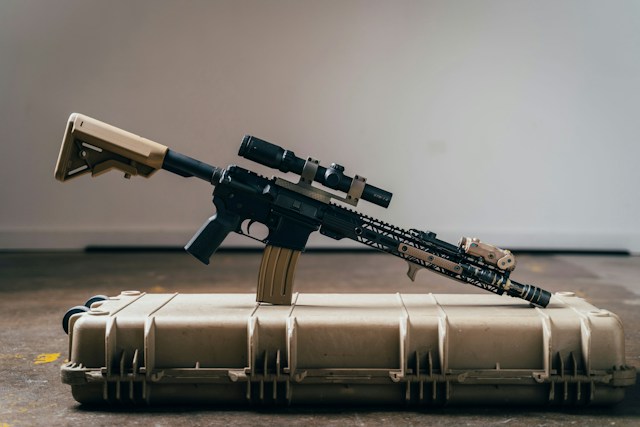
Preservation starts with restraint. Sanding a stock, polishing metal, or replacing an original finish creates changes that later owners can’t simply undo. Original cosmoline also deserves assessment before removal, especially when markings or the firearm’s storage history remain uncertain.
The distinction is preservation versus restoration: keeping existing material stable isn’t the same as making an old firearm look new.
For storage planning, a gun safe should provide both controlled access and a manageable environment. A practical relative humidity target is around 40 to 50 percent, subject to guidance for the particular firearm and its materials.
A humidity monitor gives the owner something observable to track rather than relying on how dry the room feels. Desiccant or a suitable safe dehumidifier belongs within that monitoring routine, not in place of it.
Parkerizing and bluing still warrant inspection, particularly where handling leaves marks or moisture collects. Foam-lined transport cases shouldn’t become the default long-term storage arrangement.
A routine for proper firearm maintenance and storage should include inspection every few months and an appropriate light protective oil on metal, following firearm-specific guidance. Heavy oiling isn’t a substitute for checking the storage environment.
Locked, unloaded storage with ammunition secured separately provides a clear household safety arrangement, but it shouldn’t be represented as automatically satisfying every jurisdiction’s storage laws. Original documents belong in a fire-resistant container, with copies maintained separately and clearly associated with the firearm.
Choosing the Path That Fits Your Firearm
The decision starts with establishing what the firearm is and what its records support. Unclear legal status takes priority over an appraisal, a restoration project, or a proposed transfer.
Once that uncertainty is resolved, the owner’s goals become easier to match to a path. Keeping the firearm calls for secure, monitored storage and restraint around irreversible alterations. Passing it on calls for a documented transfer process appropriate to the firearm and the transaction.
The strongest outcome isn’t necessarily a sale or a restored appearance. It’s a firearm whose condition, history, and ownership records remain intact.